If you've ever sat down to record a full-length audiobook, you already know the math doesn't work in your favor. A 70,000-word novel translates to roughly 8–10 hours of finished audio. That means weeks of recording sessions, retakes, editing, and noise cleanup — before you even think about submitting to ACX or Findaway Voices.
AI text-to-speech has changed that equation. In 2026, the best TTS tools no longer sound like a robot reading your grocery list. They breathe. They pause. They actually sound like someone who cares about the story.
But not all AI TTS tools are built with audiobook production in mind. Some are great for short-form content or marketing videos. Others excel at voice cloning. Very few are designed around the specific needs of narrators, indie authors, and audiobook producers.
This guide cuts through the noise. I've looked at the tools that actually matter for audiobook work — evaluating them on voice quality, workflow fit, ACX compatibility, and value for money.
What to Look for in an AI TTS Tool for Audiobooks
Before diving into the tools, it's worth getting clear on what "good" actually means for audiobook production specifically. The criteria are different from, say, making a YouTube voiceover.
Voice naturalness and emotional range. A narrator needs to carry a listener through hours of content. Flat, robotic delivery kills engagement fast. The best tools in 2026 handle sentence-level pacing, emphasis, and emotional tone reasonably well — though none are perfect.
Voice variety. Fiction especially demands range: different characters, genders, accents, ages. A tool with 5 voices won't cut it if you're producing a cast-heavy fantasy novel.
ACX and retail compliance. ACX requires audio at 44.1kHz or 48kHz, MP3 or WAV, with specific noise floor and peak levels. If a tool can't export in compatible formats, you're creating extra work for yourself in post-production.
Chapter and project management. Audiobooks are long. You're not producing a 2-minute clip — you're managing 20–40 chapters, each with their own files. Tools that treat every generation as a one-off quickly become painful to use at scale.
Pricing model. Most TTS tools charge by character count or by monthly subscription. For audiobook-length content, character limits matter a lot. A tool that's affordable for short content can get expensive fast when you're processing 100,000+ characters per project.
The Best AI TTS Tools for Audiobook Narration in 2026
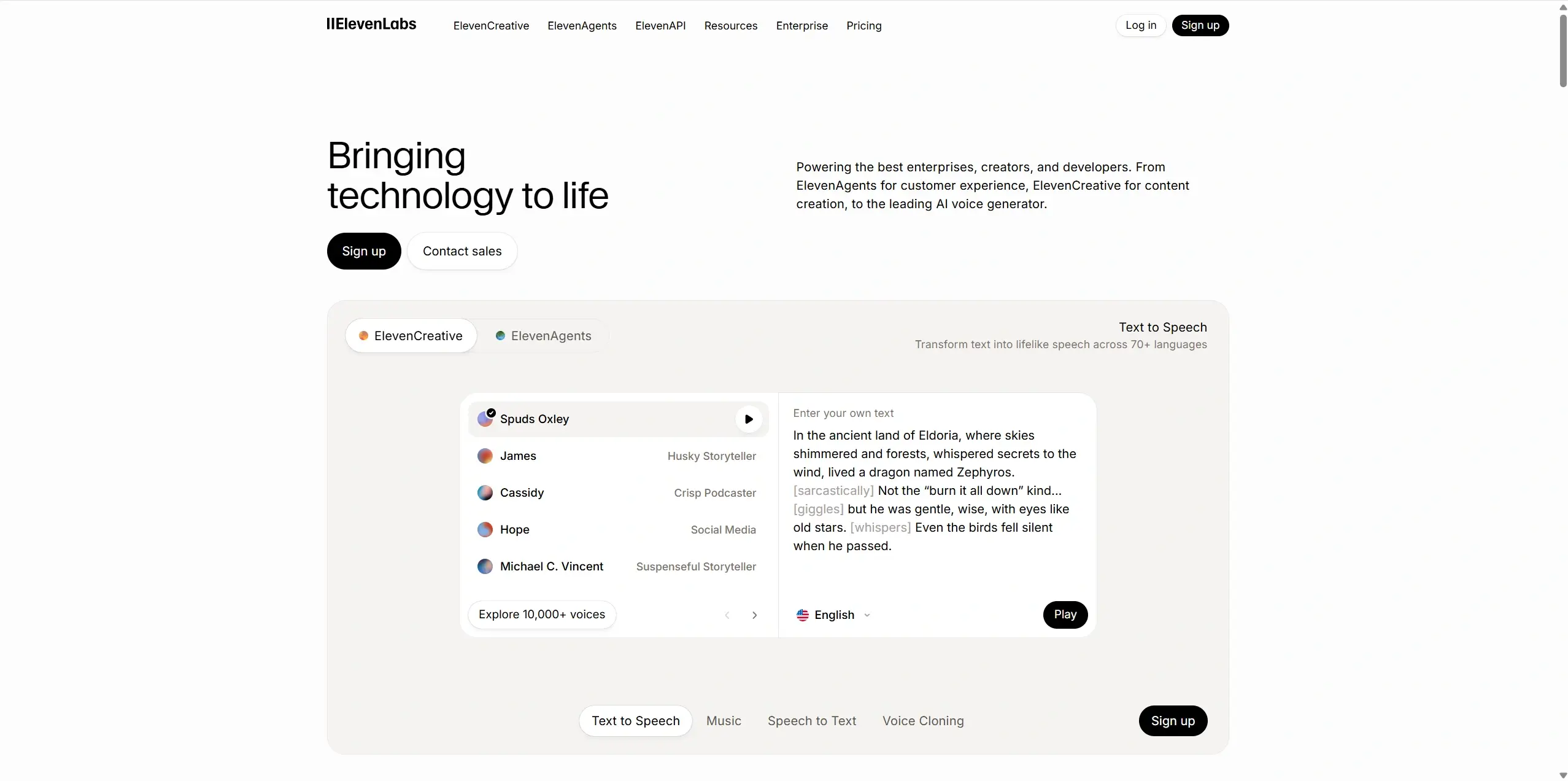
1. ElevenLabs
ElevenLabs is, without question, the benchmark for AI voice quality right now. The voices are expressive, the pacing feels natural, and the emotional range is ahead of most competitors. If you've heard an AI voice recently and thought "that actually sounds human," there's a good chance it was ElevenLabs.
What it does well: The voice library is extensive, and the voice cloning feature is genuinely impressive — you can create a custom voice from a short sample. For authors who want a consistent narrator voice across a series, this is a significant advantage.
Where it falls short: ElevenLabs is priced per character, and those costs add up quickly at audiobook scale. A full-length novel can run through a generous monthly plan fast. The platform is also primarily built for shorter-form content — there's no native chapter management or audiobook-specific workflow.
Best for: Authors and producers who prioritize voice quality above all else, and don't mind paying premium pricing or managing files manually.
Pricing: Free tier available (limited characters). Paid plans start around $5/month, but realistic audiobook usage typically requires higher tiers.
2. Murf AI
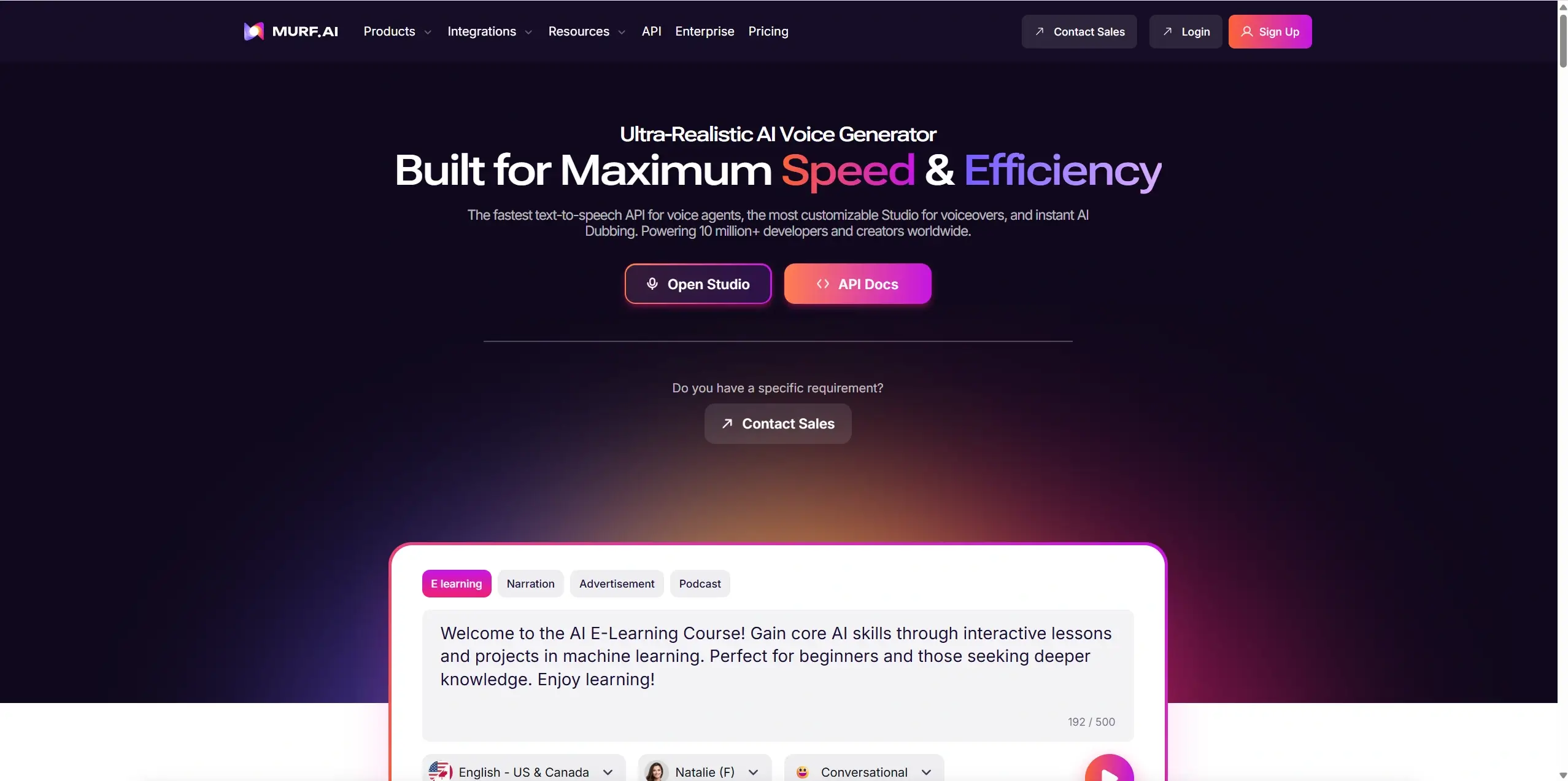
Murf has carved out a strong position in the professional voiceover market, and it shows in the product design. The studio interface is polished, the voices are commercially licensed, and the platform handles longer-form content more gracefully than most.
What it does well: Murf's voice library skews toward professional, broadcast-quality tones — which works well for non-fiction and business audiobooks. The ability to adjust pitch, speed, and emphasis per sentence gives you meaningful control over delivery.
Where it falls short: For fiction narration, Murf's voices can feel slightly formal. The emotional range doesn't quite match ElevenLabs, and the character-based pricing model presents similar scaling challenges for book-length projects.
Best for: Non-fiction authors, business book producers, and anyone creating educational or instructional audio content.
Pricing: Free plan with limited features. Paid plans from around $19/month.
3. PlayHT
PlayHT's strongest card is its voice cloning capability and the sheer breadth of its voice library — one of the largest available. It's also been aggressive about adding ultra-realistic voices through partnerships and its own model development.
What it does well: The voice variety is hard to beat. If you need a specific accent, age range, or speaking style, PlayHT likely has something close. The API access on paid plans is also useful if you're building a more automated production workflow.
Where it falls short: Quality can be inconsistent across different voices — the top-tier voices are excellent, but some of the library feels dated. The interface is functional but not particularly intuitive for managing multi-chapter projects.
Best for: Producers who need voice variety and are comfortable with a more technical workflow.
Pricing: Free tier available. Paid plans from around $31/month for unlimited generation.
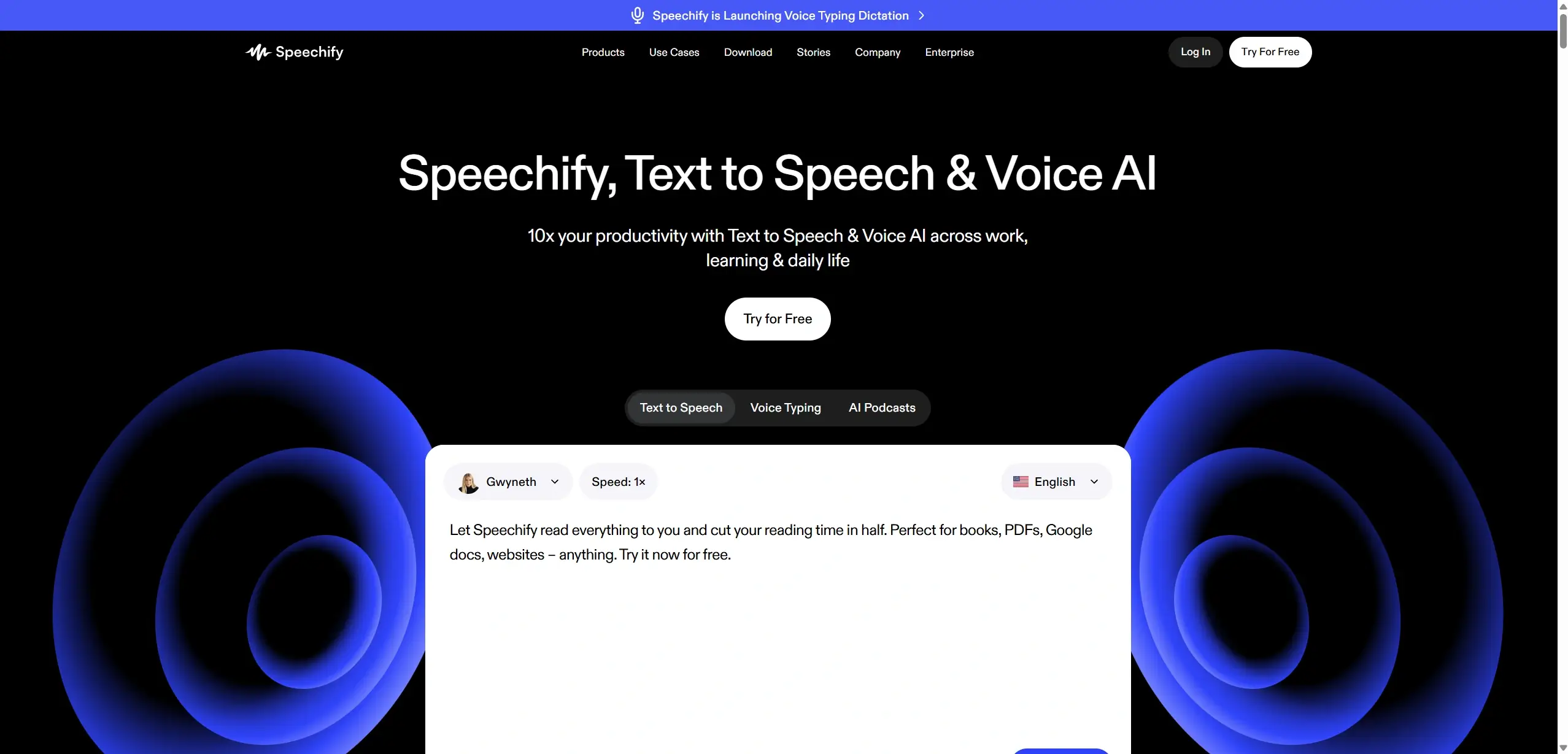
4. Speechify
Speechify started as a read-aloud app for accessibility and personal productivity, and that heritage shows. It's excellent at converting text to audio quickly and cleanly — and the mobile experience is genuinely better than most competitors.
What it does well: Speed and simplicity. If you need to convert a manuscript to audio fast, Speechify delivers. The voice quality on their premium voices has improved significantly, and celebrity voice partnerships give it some marketing appeal.
Where it falls short: Speechify isn't really designed for audiobook production. There's no chapter management, limited export control, and the platform is fundamentally built around personal listening rather than professional output. Getting ACX-compliant files out of it requires extra steps.
Best for: Authors who want to proofread by listening, or create rough drafts to review — not for final production.
Pricing: Free tier available. Premium from around $139/year.
5. Castory
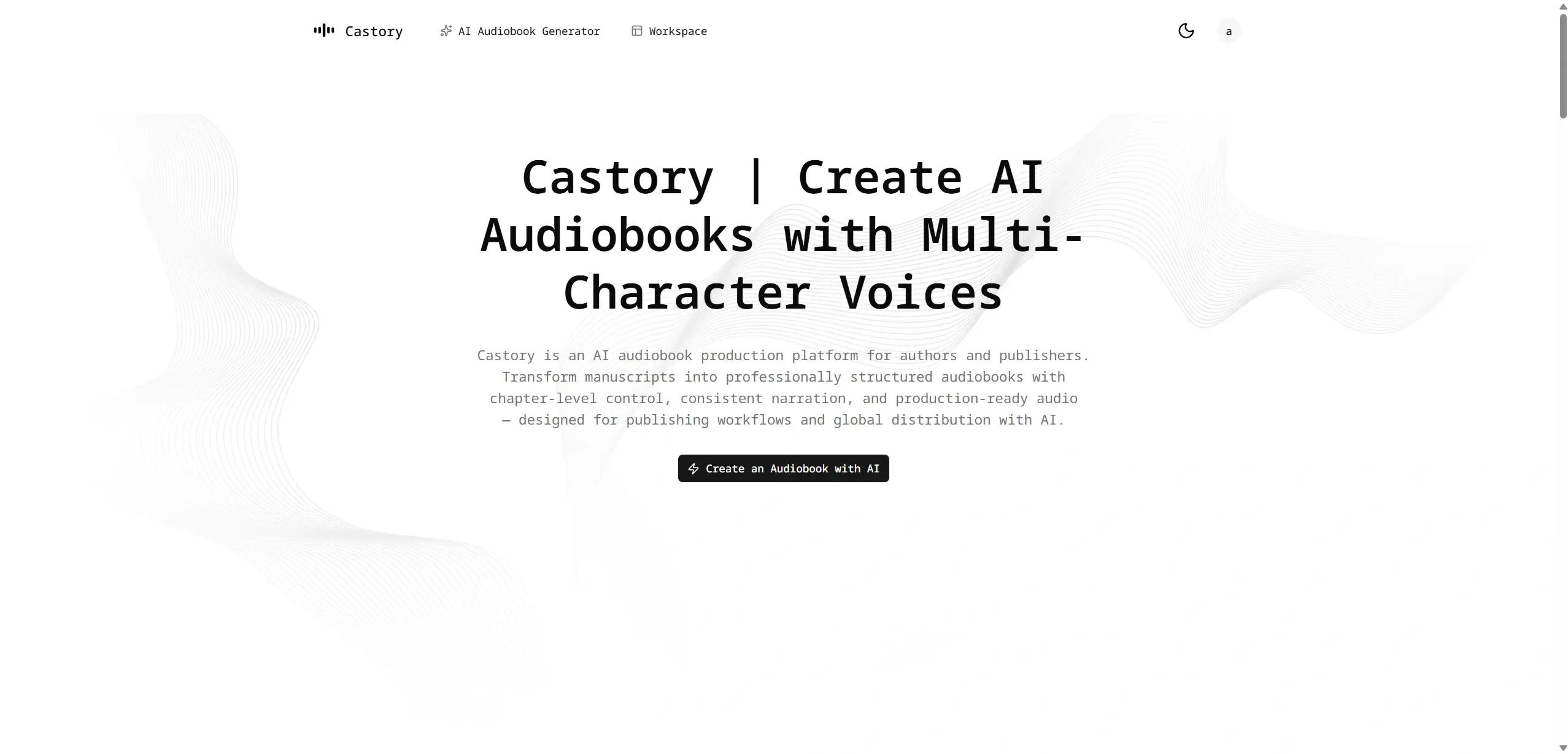
Castory is the newest tool on this list and the one most explicitly designed around the audiobook creation workflow. Unlike most text-to-speech (TTS) tools, which were initially built for short content and later adapted for longer projects, Castory assumes from the outset that users are producing a full-length book.
What it does well: Its strengths lie in a workflow centered around chapters rather than individual snippets. Users can organize projects by chapter and generate audio sequentially, offering significant practical convenience when projects span multiple chapters. Its text-to-speech output is clear and natural, matching the intonation style of professional narrators, and its export process is specifically designed to meet ACX standards.
Where it's heading: Castory is actively developing multi-character and emotional matching features—enabling users to automatically assign distinct voices to different roles and adjust emotional intonation based on scenes. This addresses a significant gap in the current market.
Best for: Indie authors and audiobook producers who want a tool built specifically for book-length production, and want to grow with a platform that's being developed with their workflow in mind.
Pricing: Currently free, new users receive 5,000 complimentary credits.
Side-by-Side Comparison
| Tool | Voice Quality | Multi-Character | ACX Export | Free Tier | Best For |
|---|---|---|---|---|---|
| ElevenLabs | ⭐⭐⭐⭐⭐ | Manual editing | With editing | ✅ | Premium quality |
| Murf AI | ⭐⭐⭐⭐ | Limited | ✅ | ✅ | Non-fiction |
| PlayHT | ⭐⭐⭐⭐ | Limited | ✅ | ✅ | Voice variety |
| Speechify | ⭐⭐⭐ | ❌ | Extra steps | ✅ | Proofreading |
| Castory | ⭐⭐⭐⭐ | Coming soon | ✅ | ✅ | Full audiobook workflow |
Which Tool Should You Choose?
There's no single right answer — it depends on what you're optimizing for.
If voice quality is your top priority and budget isn't a constraint, ElevenLabs is the current leader. You'll need to manage the workflow yourself, but the output quality is hard to argue with.
If you're producing non-fiction or business content, Murf's professional tone library and polished interface make it a strong choice. The voices suit the genre well.
If you need maximum voice variety, PlayHT's library gives you the most options, especially if you're working across multiple projects with different voice requirements.
If you're an indie author or small producer who wants a tool built specifically for book-length projects, Castory is worth a close look. The workflow-first design makes chapter-by-chapter production feel manageable rather than cobbled together — and the roadmap suggests it's keeping getting more useful for exactly this use case.
The honest take: most serious audiobook producers end up using more than one tool. You might use ElevenLabs for a premium project where quality justifies the cost, and Castory for managing the production workflow across a larger catalog.
Final Thoughts
The AI TTS landscape in 2026 is genuinely good. Not "good for AI" — just good. The tools on this list can produce audiobook narration that a significant portion of listeners won't distinguish from human recording, especially in non-fiction and instructional content.
The gap isn't really in voice quality anymore. It's in workflow. The tools that will win for serious audiobook producers are the ones that understand the production process end-to-end — not just the moment of generation, but the chapter management, the export pipeline, the revision cycle.
That's the direction the space is moving, and it's worth paying attention to which tools are building with that in mind.
If you want to try an AI audiobook workflow without committing to a paid plan, start with Castory's free tier at Castory. Build a chapter, export it, and see if it fits your process.